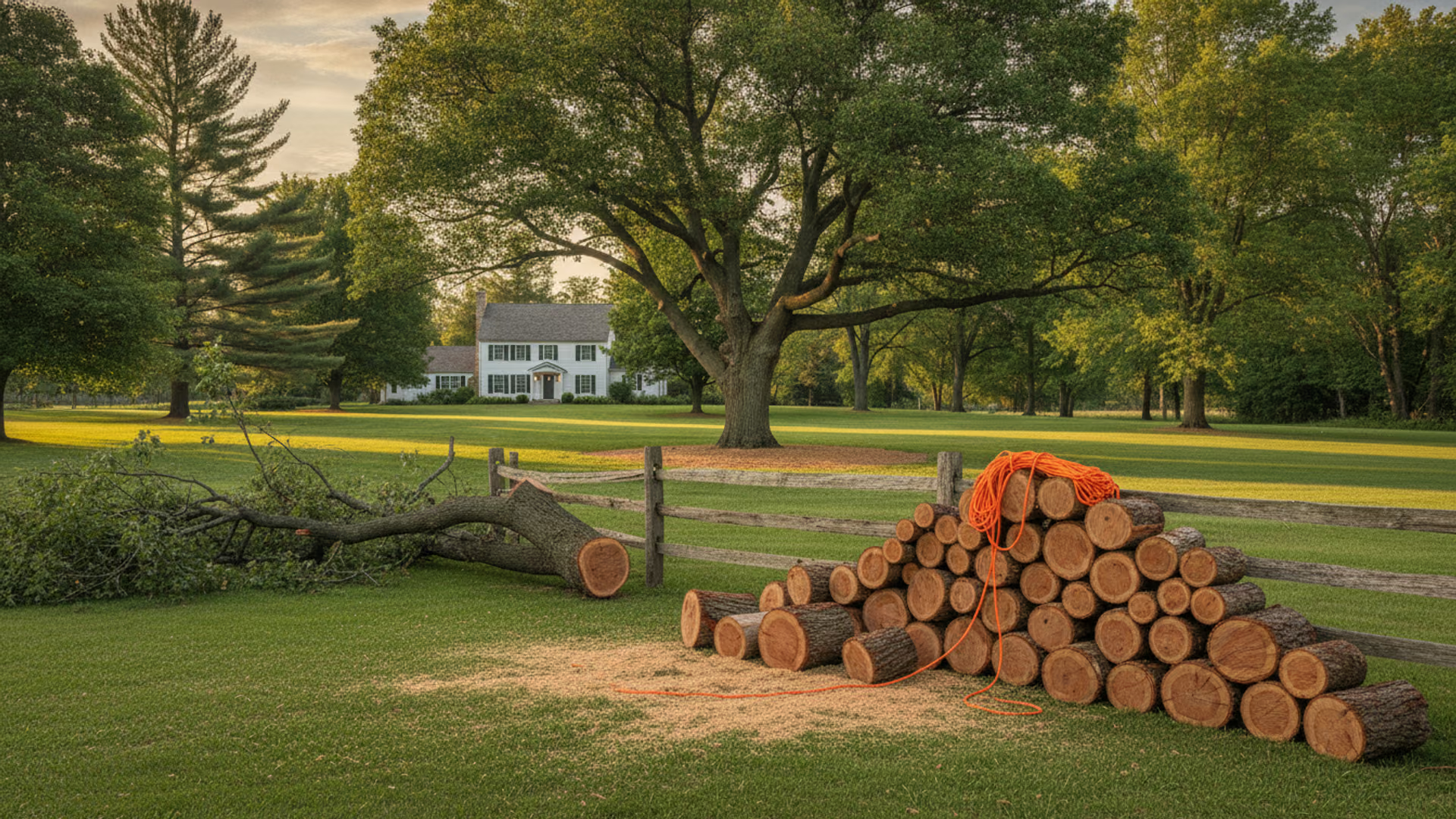
There's a tree across the driveway, a limb through the fence, and a yard full of branches that weren't there yesterday. G & R Tree Surgeons handles storm damage tree removal in Sidney, MI and across Montcalm County — fallen trees cut up and hauled off, downed limbs lifted off roofs and fences, and the whole mess chipped, loaded, and raked until your property looks like a yard again. We're not going to pretend we have a fleet idling by the phone. We're a local crew that schedules storm cleanup honestly, quotes every job in writing for free, and does 100% of the work ourselves. Get a free estimate and we'll give you an honest window, not a slogan.
What to Do Right After a Storm
Before you think about cleanup, think about what the storm left loaded. A trunk lying across a fence, a limb hung up in another tree, a stem split partway down — all of that wood is under tension, storing energy exactly like a bent spring. Cutting it in the wrong place, or walking under it, is how homeowners get hurt in the days after a storm, not during it.
So, in order:
- If a tree or limb is touching a power line, call your utility company first — before any tree service, including us. A downed line can energize the whole tree and the wet ground around it. We will not work on a tree in contact with an energized line, and you should be suspicious of anyone who says they will.
- Stay out from under hung or pinned wood, and don't put a chainsaw into anything that's bearing weight on a structure or another tree.
- Photograph everything before anything moves — wide shots and close-ups of the tree, what it hit, and the surrounding damage. Your insurer will want them.
- Then call us at (989) 658-5541 for a free written estimate.
Storm Damage Tree Removal for Fallen Trees and Downed Limbs
This is the core of the work: fallen tree removal from yards, driveways, fences, and rooflines. Maybe the whole tree went over at the roots. Maybe the tree fell on the fence and is see-sawing on the top rail. Maybe a big scaffold branch came down on the driveway and the car is trapped behind it. Every one of those is a different rigging problem, and the difference between a clean job and a wrecked fence is how the loaded wood gets released.
Our crew reads the tension first. A trunk pinned across a fence is compressed on one side and stretched on the other — cut the wrong face and the bar pinches or the log rolls. We make small release cuts to bleed the load off, then section the wood into manageable pieces and lift them clear of whatever they're resting on. Nothing gets dragged across the lawn, and nothing free-falls onto what the storm didn't already break. Downed tree removal done this way is slower than yanking it off with a truck strap — and it's why the fence panel under the tree usually survives.
If a storm-broken tree is still standing — snapped leader, major limbs torn out, trunk cracked — we'll tell you straight whether it's a candidate for complete tree removal rather than patchwork cleanup.
Storm Debris Cleanup & Hauling
Half of storm work is what happens after the big wood is down. Storm damage cleanup means the scattered limbs, the blanket of small branches, and the brush piles all get dealt with: limbs go through the chipper, trunk wood gets bucked and hauled, and the work area gets raked before we leave. If you'd like the wood left for firewood, we'll buck it to length and stack it on site instead — your call at the estimate.
We run this same standard everywhere we work, from our home base with storm cleanup crews near Sidney, MI to Greenville and Rockford, and out to storm cleanup Grand Rapids homeowners book after the big wind events roll through Kent County.
Help Documenting Damage for Your Insurance Claim
Insurance is the question on every storm call, so here is exactly what we do and don't do. We document: photos of the damage before we start, during the removal, and after cleanup, plus a written scope of work describing what was removed and what it was removed from. That paperwork is what an adjuster actually wants to see, and having it in hand makes your claim conversation far easier.
What we don't do is handle the claim itself or promise what your policy will pay — coverage typically hinges on whether the tree hit a covered structure, and that's between you and your insurer. We give you the evidence; you keep control of the claim.
Storm Damage in Michigan: Ice, Wind, and Wet Snow
Montcalm County trees take hits from three directions. Winter ice storms coat limbs in freezing rain, and even a quarter inch of ice multiplies the weight a branch carries until something lets go. Heavy, wet early- and late-season snow does the same thing to limbs still holding leaves. And summer thunderstorm winds — the straight-line gusts that tear across mid-Michigan — push whole crowns like sails, tipping trees out of rain-saturated ground at the roots.
We've been cleaning up after all three since 2022. In four years and 500+ completed projects around Sidney, Greenville, and the Grand Rapids area, storm calls have been part of nearly every season — which is exactly why we quote them honestly instead of theatrically.
Before the Next Storm
The trees that fail in a storm are usually the ones carrying problems into it — dense, unthinned crowns that catch wind, and deadwood that was going to come down eventually anyway. Thinning and deadwood removal before storm season takes weight and sail area out of the canopy, and it's a fraction of the cost of the cleanup. If you're looking at dead or leaning trees before the next storm, that's its own service and worth handling on your schedule instead of the weather's.
Whether the tree is already down or you want it gone before the next front, contact G & R Tree Surgeons or request your free estimate — Matthew and the crew will walk the damage with you and put the price in writing. Get Free Estimate.