The ash at the edge of the driveway hasn't put out leaves in two springs. The silver maple over the garage drops a bigger limb every time the wind comes through. Or the spruce somebody planted three feet from the foundation forty years ago has finally won its argument with your gutters. When a tree is dead, failing, or simply in the way, the answer is taking the whole thing down — and if you've been searching for a tree cutting service that can do it without touching the house, that is the work G & R Tree Surgeons does every week. We've completed 500+ projects, earned 23+ five-star Google reviews, and every job of tree removal in Sidney, MI is done by our own crews. Get a free estimate and we'll walk the tree with you.
When Removal Is the Right Call — and When It Isn't
Some trees announce themselves. No leaves this spring while the neighbors' trees leafed out. Bark falling off in sheets. Mushrooms or shelf fungus sprouting at the base — that last one matters most, because fungus fruiting at the root flare usually means advanced decay in the wood that holds the tree up. A tree with a mostly dead crown, a trunk cavity you can put your arm in, or rot at the base isn't a candidate for saving; it's a candidate for a controlled removal before it picks its own moment to come down.
Removal is also the right call for healthy trees in the wrong place: a species that outgrew its spot, roots heading for the septic field, or a tree standing where the new garage is going.
And sometimes it isn't the right call at all. If the tree is healthy and just overgrown — branches touching the roof, a blocked view, too much shade — routine pruning and trimming solves the problem for a fraction of the cost and keeps the tree. We'll tell you which situation you have, honestly, at the estimate.
How We Take a Tree Down: The Removal Process
Assessment and Free Estimate
Every removal starts with a walk around the tree. We read the lean, probe for decay, note the targets — house, fence, well head, power drop, garden — and check what equipment can actually reach the trunk. Then you get a written estimate covering the scope, the price, and what happens to the wood.
Rigging and Controlled Lowering
Unless a tree has a wide-open place to fall, it comes down in sections. A climber ascends the trunk (or works from a lift where access allows) and dismantles the crown from the top down. Each limb is tied to a rigging point before it's cut, then lowered on ropes by the ground crew — the rope and the friction device, not gravity, decide how fast the piece moves. Trunk wood comes down the same way, in short sections a lowering line can hold. Nothing free-falls over a roof, a fence, a wire, or a flower bed. It's slower than felling, and it's the entire difference between a removal and an accident.
Cleanup and Haul-Away
The last hour of a removal is cleanup. Limbs and brush go through the chipper, the trunk is bucked into movable sections and loaded out, and the lawn gets raked. When the truck pulls away, what's left is a stump at grade and grass — not a debris field you spend a weekend dragging to the burn pile.
Large and Over-Structure Removals
Big trunk diameters, trees leaning over the house or garage, backyard trees with no equipment access — these are planning jobs before they're cutting jobs. We map the drop zone, protect the surfaces underneath, and size each cut to what the rigging can safely carry, even when that means taking a large crown apart in dozens of pieces. The very biggest over-structure trees are sometimes best handled as crane assisted tree removal, lifting whole sections up and over the roof instead of lowering them through the canopy — we'll tell you at the estimate if your tree is one of them.
Two situations deserve their own approach. If the tree is actively failing — a new lean, soil cracking or mounding at the base — treat it as removing a dead or leaning tree, and keep people out from under it in the meantime. If it has already come down in weather, that's storm-damaged or fallen trees, a different kind of job with its own hazards. And if any part of the tree is touching a power line, call the utility first — that span is theirs before it's anyone's.
Dead Ash and EAB Removals
Emerald ash borer has worked through the woodlots and yard trees of Montcalm and Kent County the way it has everywhere else in Michigan, and the dead ash it leaves behind are a special case. You'll see the signs from the driveway: bark flecked pale where woodpeckers have been chasing larvae, D-shaped exit holes the size of a grain of rice, a crown that died from the top down. Here's the part that matters — dead ash gets brittle fast. Within a couple of years the wood stops holding predictably; limbs snap instead of hinging, and tops can shatter under a climber's weight. That's why a dead ash should come down sooner rather than later, and why we rig them more conservatively, in smaller pieces, than a sound tree of the same size.
What Happens to the Wood — and the Stump
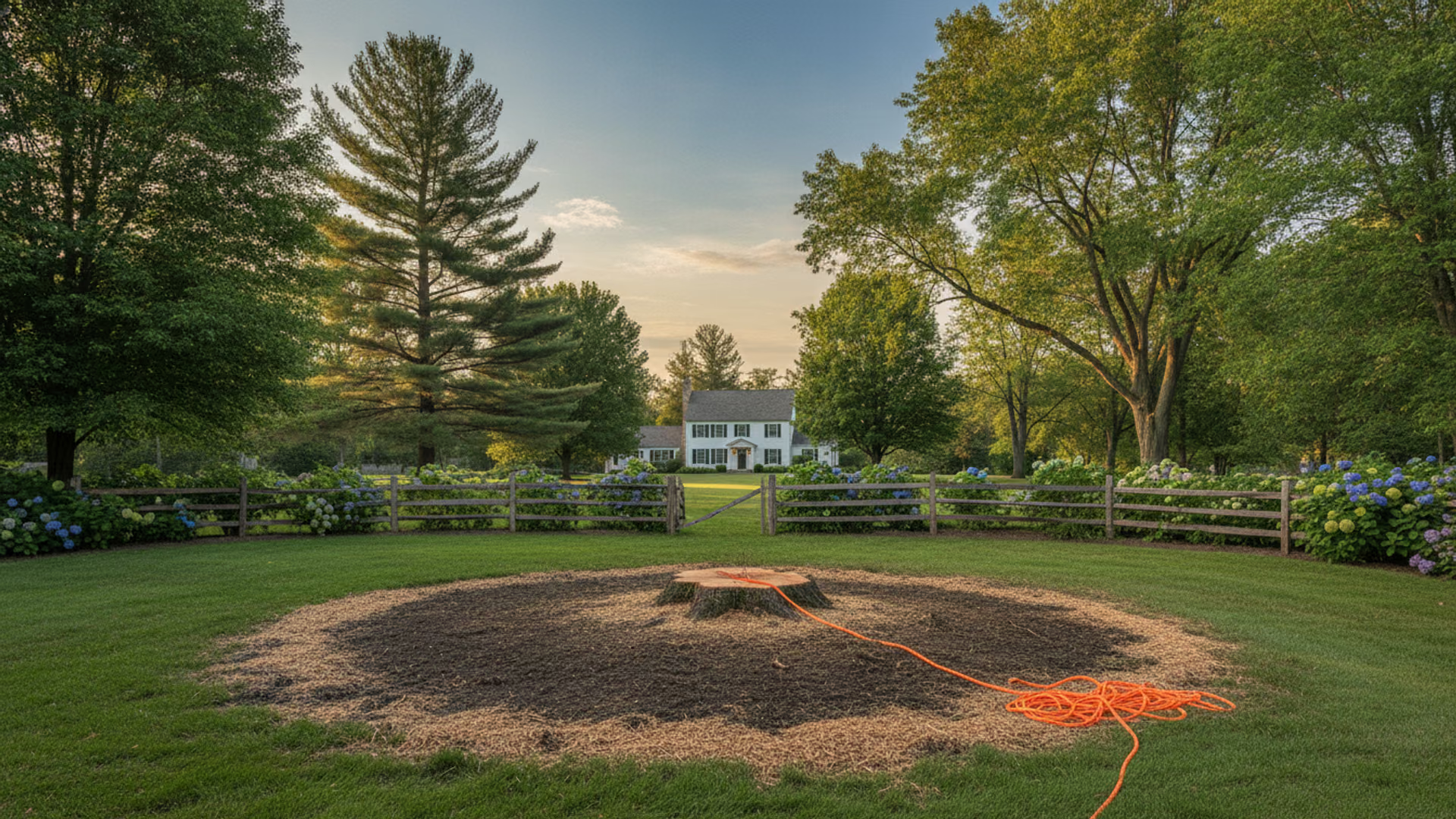
You choose. The default is a clean exit: brush chipped, trunk wood hauled, lawn raked. If you burn wood, we'll buck the trunk into rounds and leave them on-site instead — a mature hardwood is a lot of firewood. The stump stays at grade unless you add stump grinding, which chews it below the soil line so you can seed grass or plant over the spot. Either way, it's decided in the estimate, not improvised on job day.
What Affects Tree Removal Cost
Tree removal cost comes down to a handful of physical facts: how tall the tree is, how thick the trunk is, what's underneath it, and how close equipment can get. A tree that can be felled whole into open lawn is the cheap end; a tree that must be dismantled piece by piece over a roof is the expensive end. Dead, brittle wood raises the price too, because it has to be rigged in smaller, more cautious sections. We put real numbers and benchmarks in one place — see typical tree removal cost factors — and the number for your tree comes from a free written estimate, never a guess over the phone.
Tree Removal Across Sidney, MI and West Michigan
We're based on West Sidney Road, so tree removal near Sidney, MI and the surrounding Montcalm County townships is home turf. The same crews handle tree removal Greenville MI homeowners call about, tree removal Rockford MI properties need, and tree removal Grand Rapids jobs across Kent County — same rigging standards, same cleanup, whichever county the tree stands in.
G & R Tree Surgeons has been taking trees down since 2022 — four years, 500+ projects, and our full range of tree services delivered by our own crews under owner Matthew. If a tree on your property is done, get your free estimate and we'll plan its exit.